E-Girl vs Gamer Girl: What's Actually the Difference?
8 min read
An e-girl is a style and online vibe. A gamer girl is someone who plays games. Here's where the labels came from, where they overlap, and why it matters less than you think.
Short answer: "e-girl" is mostly about an aesthetic and an online persona, while "gamer girl" is about a hobby: she plays games. Some e-girls game a lot, plenty of gamer girls have never touched winged eyeliner, and many people are both or neither. Below you'll get where each term came from, how they differ and overlap, the stereotypes worth dropping, and how to find someone to actually play with, whatever label fits.
The quick version
If you only read one part, read this table.
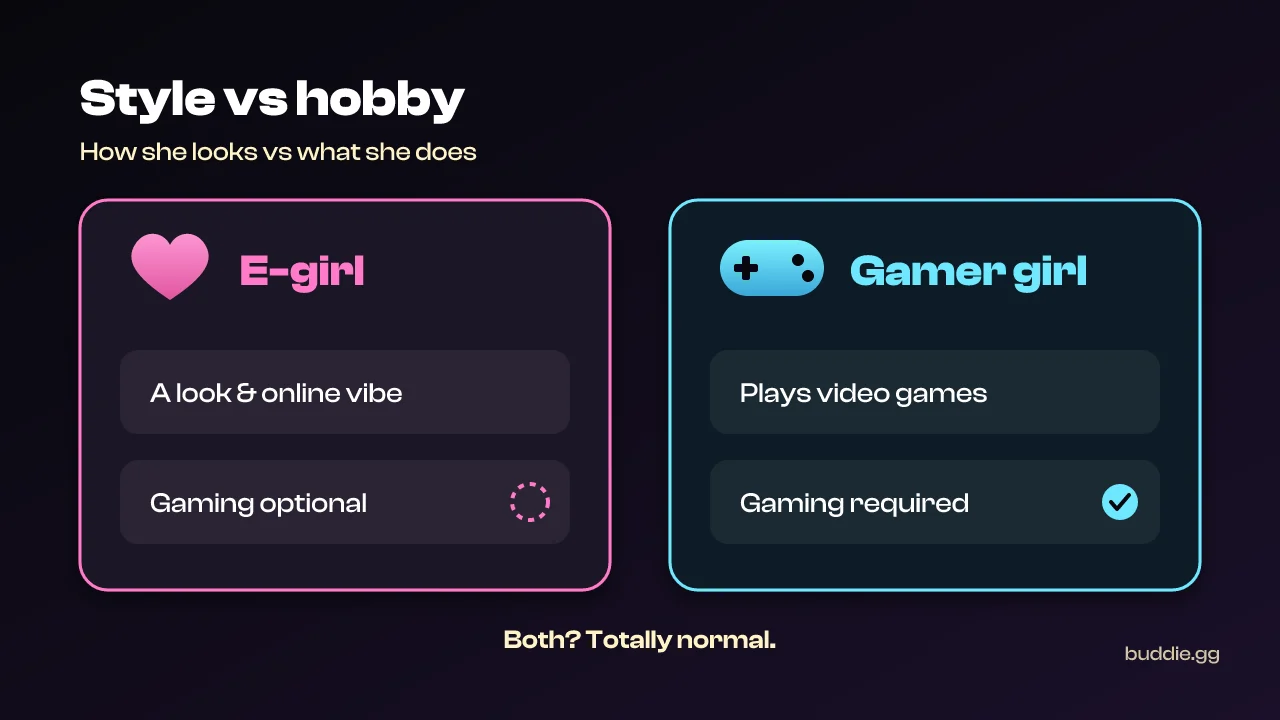
| | E-girl | Gamer girl | |---|---|---| | What it describes | A look, a style and an online vibe | Someone who plays video games | | Core of the identity | Fashion, makeup, content, internet culture | Games, ranks, mains, hours played | | Where it grew | TikTok, Instagram, Twitch, Discord | Anywhere games are played | | Requires gaming? | No | Yes, that's the whole point | | Typical signals | Heart or freckle makeup, blush, chains, dyed hair, alt or pastel fits | Talking about patches, ranks, builds, favorite games | | Old meaning | Used as a dismissive gaming insult | Sometimes used to doubt whether she "really" plays |
The big takeaway: one label describes how someone presents, the other describes what someone does. They're not opposites, and they're not the same thing.
Where "e-girl" came from
"E-girl" (electronic girl) has been floating around the internet for a long time. In older gaming spaces it was often used as a put-down, aimed at girls who were online, active in communities, or getting attention in games and chats. The implication was usually unfair: that she was there for attention rather than for the game.
That changed around the late 2010s, when the term got reclaimed as a style on TikTok and other platforms. The modern e-girl look borrows from emo, scene, goth, anime and skater culture, and typically includes things like:
- Bold eyeliner, heavy blush across the cheeks and nose, and small drawn hearts or freckles
- Dyed hair, often with two-tone streaks at the front
- Layered outfits: striped long sleeves under tees, plaid skirts, chains, chokers, platform shoes
- A playful, slightly ironic online presence with lots of memes and internet references
Today most people using the word mean that aesthetic and the creator culture around it, not an insult. The guy version, "e-boy," follows the same vibe: curtain haircut, chains, layered tees, a bit of soft-grunge energy.
Notice what's missing from that list: games. Lots of e-girls game because the style grew up in the same online spaces as Twitch and Discord, but the term itself doesn't require it.
Where "gamer girl" came from
"Gamer girl" is simpler. It just means a girl who plays games. The phrase got popular as gaming went mainstream and more women became visible in multiplayer games, streaming and esports.
The term has a messy history too. For years, "gamer girl" came with an unspoken asterisk, as if a girl playing games needed to prove it. You've probably seen the old routine: someone hears a girl on voice chat and immediately starts quizzing her on lore or questioning her rank. That's the baggage the phrase carries in some lobbies.
These days, plenty of players use it proudly and casually. A gamer girl might be grinding ranked in Valorant, building a massive base in Minecraft, sweating in Fortnite or just playing cozy games after work. Her style can be anything: hoodie and messy bun, full alt fit, or whatever's clean.
Where the two overlap
The overlap is real, and it's why people mix the terms up.
- Shared spaces. The e-girl aesthetic grew alongside Twitch streaming, Discord servers and gaming TikTok, so a lot of e-girls are into games.
- Streaming and content. Many streamers combine a strong visual style with serious gameplay. They're e-girls by look and gamer girls by hobby.
- Internet humor. Both groups speak fluent meme, which makes the line even blurrier from the outside.
So you can have:
- An e-girl who doesn't game at all and is mostly about fashion and content
- A gamer girl with zero interest in the e-girl look
- Someone who's fully both: alt style on cam, diamond rank in game
- Someone who just likes playing games and doesn't care about either label
All four are normal. None of them is "more legit" than the others.
Stereotypes worth dropping
Both labels come with lazy assumptions that make lobbies worse for everyone. A few to leave behind:
"E-girls don't actually play"
Style tells you nothing about skill. Someone with blush hearts and a chain necklace might hard-carry your lobby. Judge gameplay by gameplay.
"Gamer girls only play easy or casual games"
Women play every genre: tactical shooters, MOBAs, battle royales, fighting games, strategy, sandbox. Casual games also aren't a lesser category. Plenty of the best-selling games ever are "casual."
"She's only here for attention"
This is the oldest one, and it's the reason "e-girl" started as an insult. People join games and voice chat for the same reasons everyone does: to win, have fun and hang out.
"Girls need to prove they're real gamers"
Nobody quizzes the random guy on lore before letting him play. The gatekeeping is the problem, not the player.
If you want a good time in voice, the rule is simple: treat everyone like a teammate first.
Is calling someone an e-girl rude?
It depends on context and intent.
- If someone describes herself as an e-girl, it's just a style label, like saying someone's into streetwear or goth fashion. Using it the same way is fine.
- If you're using it to dismiss someone's skill or imply she's "just there for attention," that's the old insult, and people will read it that way.
- If you're not sure, don't label people at all. Ask what games she plays and what rank she's at. That's a better conversation anyway.
Same goes for "gamer girl." Lots of people like it. Some find it unnecessary, since nobody says "gamer boy" in the same way. When in doubt, "gamer" works for everyone.
Finding an e-girl or gamer girl to play with
A lot of people search this topic because they want a duo: someone fun to queue with, talk to and maybe climb with. Whether you care about the e-girl vibe or just want a chill teammate, what actually matters is fit.
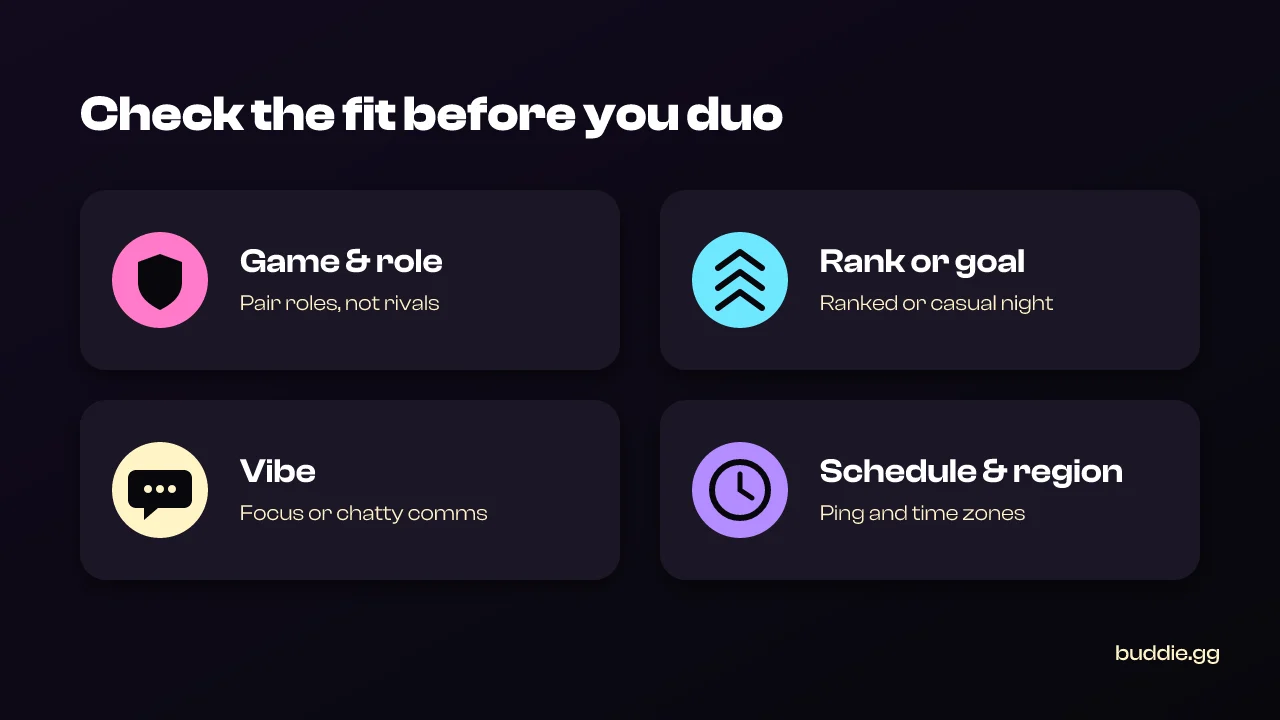
Things worth checking before you play with anyone:
- Game and role. A support main and a duelist-only player is a better pairing than two players fighting for the same pick.
- Rank or goal. Climbing ranked and goofing around in casuals are two very different nights.
- Vibe. Some people want comms-only focus, others want constant chatting. Neither is wrong; mismatched is.
- Schedule and region. Ping and time zones kill duos faster than bad plays.
This is where buddie is built to help. It's a marketplace where you order a buddie to play with, whether that's a ranked duo partner, a chill teammate or an e-girl or e-boy gamer to hang out and chat with. Each game has its own page where you can filter buddies by rank and role, so you can jump straight into something like Valorant LFG or League of Legends LFG, or browse all games on buddie if you play something else. More than 180 games are listed.
A couple of features help with the vibe check before you commit. Many buddies have a voice intro on their card you can play first, and you can message a buddie before ordering to ask about playstyle, mains or what kind of game you're after. Once you order, a private order room opens with chat, voice call and screen sharing.
One thing to be clear on: buddie is not a dating site and has no adult content. Ordering an e-girl gamer there means gaming and good company, nothing more. The buddie guidelines spell it out: nothing sexual or suggestive is allowed.
Want to be the e-girl or gamer girl people order?
If you're good company in voice, know your game well or have a style people vibe with, you can also earn by playing. On buddie, you apply on the Become a buddie page; you need to be 18 or older, and every application is reviewed before approval.
A few honest tips if you go for it:
- Lead with the game, not the label. Your rank, mains and what you're good at teaching matter more than whether you call yourself an e-girl.
- Record a voice intro. It lets people hear your energy before they order.
- Set your own price sensibly. Each buddie sets their own rates. Many start lower while building reviews, then adjust once regulars come back.
- Be the duo you'd want. Good comms, positive tilt control and showing up on time are what get people to order again.
FAQ
What's the main difference between an e-girl and a gamer girl?
An e-girl is defined by an aesthetic and online persona: alt fashion, bold makeup and internet culture. A gamer girl is defined by playing games. One can be both, either or neither, because one label is about style and the other is about a hobby.
Do e-girls actually play video games?
Many do, since the style grew up around Twitch, Discord and gaming TikTok. But the term itself doesn't require gaming, and some e-girls are mostly into fashion and content. Style says nothing about skill either way.
Is "e-girl" an insult?
It started as a dismissive term in gaming communities, but it has since been reclaimed as a fashion and creator style. Whether it lands as an insult depends on how it's used. If someone calls herself an e-girl, it's a style label; if it's used to doubt her skill, it's the old put-down.
What's an e-boy?
An e-boy is the male version of the same aesthetic: curtain hair, chains, layered tees and a soft-grunge or alt look. Like e-girls, some e-boys game a lot and some don't. On buddie you can find both e-girl and e-boy gamers to play with.
How can I find an e-girl gamer to duo with?
Pick your game, then look for someone whose rank, role and vibe match yours. On buddie, each game page lets you filter by rank and role, many buddies have a voice intro, and you can message a buddie before ordering. Everything stays safe for work and focused on playing together.